Not every car needs a full wash every week — but dust, pollen, and the odd smudge on the glass build up fast, especially if the car sits outdoors. Waterless detailing lets you keep it presentable in ten minutes without hauling out a bucket.
Why "just wipe it with a dry cloth" is a bad idea
Dust sitting on a painted surface is essentially loose grit. Wiping it off dry — even with microfiber — drags those particles across the clear coat. The waterless method isn't about skipping product; it's about using a proper waterless wash spray as a lubricant so dust gets suspended and lifted, not dragged.
The method
- Spray a waterless wash solution generously over one panel at a time — don't spread it too thin.
- Let it sit for a few seconds to loosen dust and start breaking the bond between grit and paint.
- Using a plush, clean microfiber cloth, wipe gently in straight lines rather than circles, using light pressure.
- Flip to a clean section of the cloth (or a fresh cloth) frequently — this is the step people skip, and it's the one that actually prevents scratching.
- Buff any residue with a separate dry, ultra-soft cloth.
What to keep in your kit
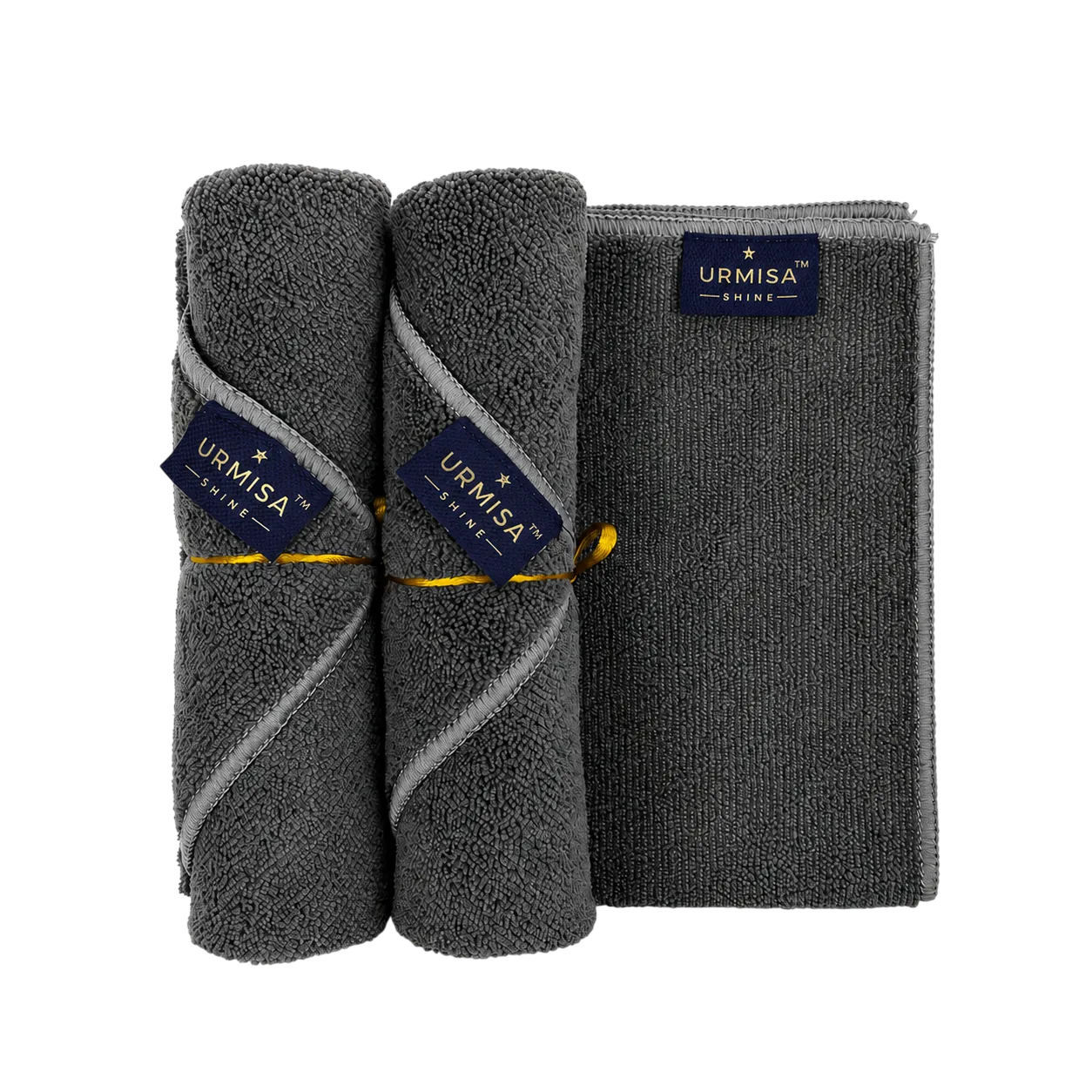
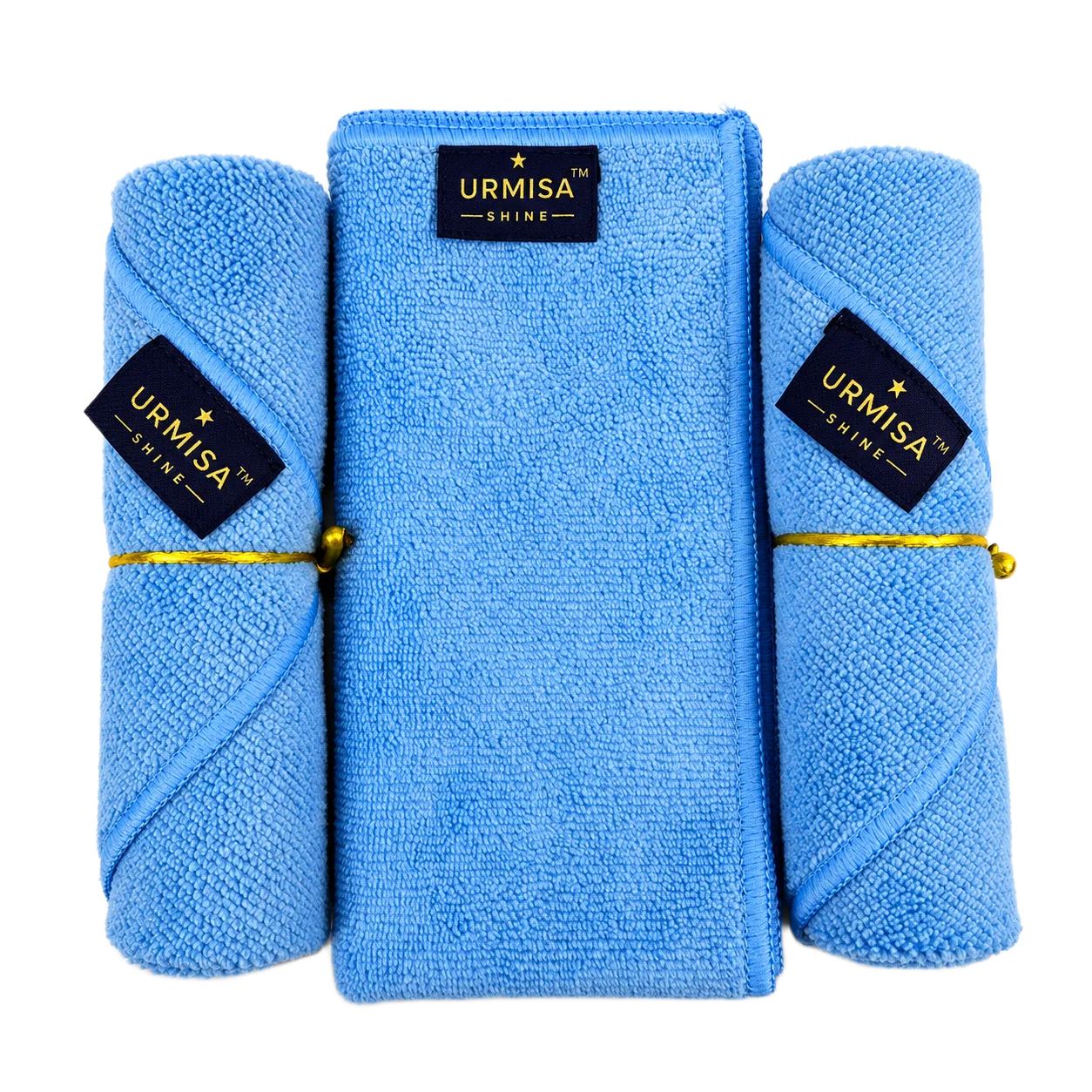
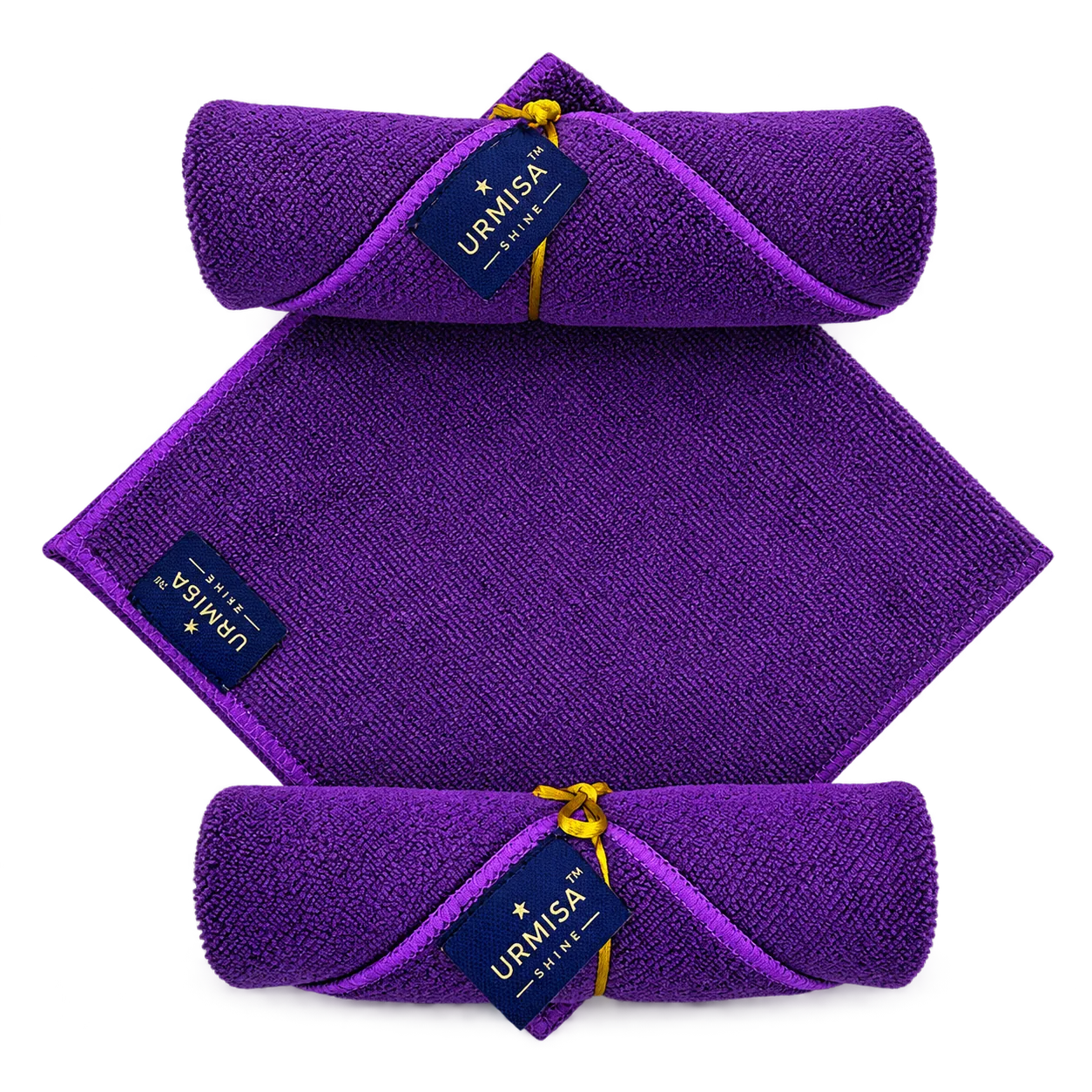
Two to three clean microfiber cloths per session is realistic — one working cloth per couple of panels, rotated in as they pick up grime, plus a dedicated final-buff cloth kept spotless. This is exactly why a multi-pack rather than a single towel makes sense for anyone detailing regularly.
When waterless isn't enough
Waterless detailing is for light dust and touch-ups — not for mud, tar, or heavy grime, which need a proper wash to avoid dragging hard particles across the paint regardless of lubricant. Use it to extend the gap between full washes, not replace them entirely.