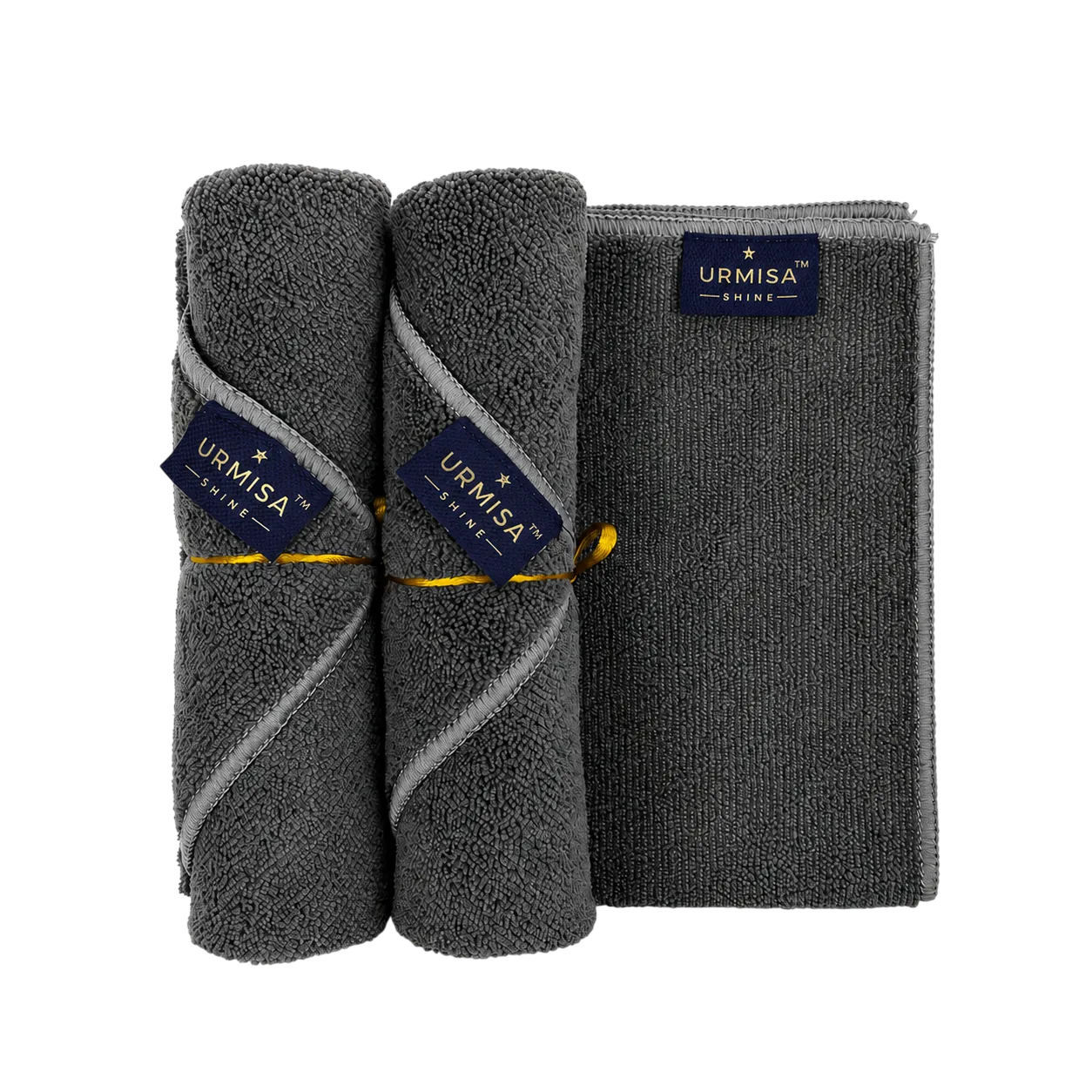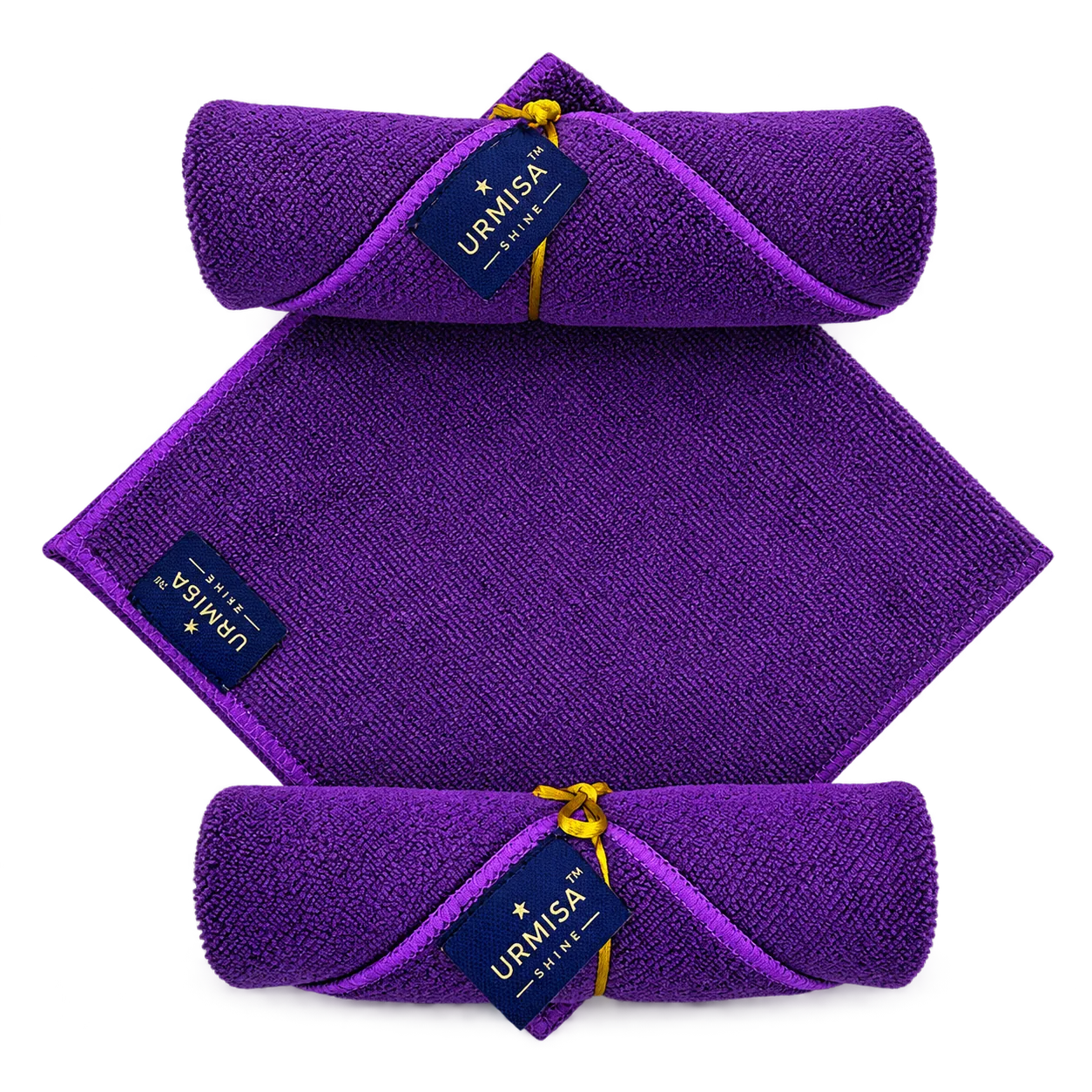
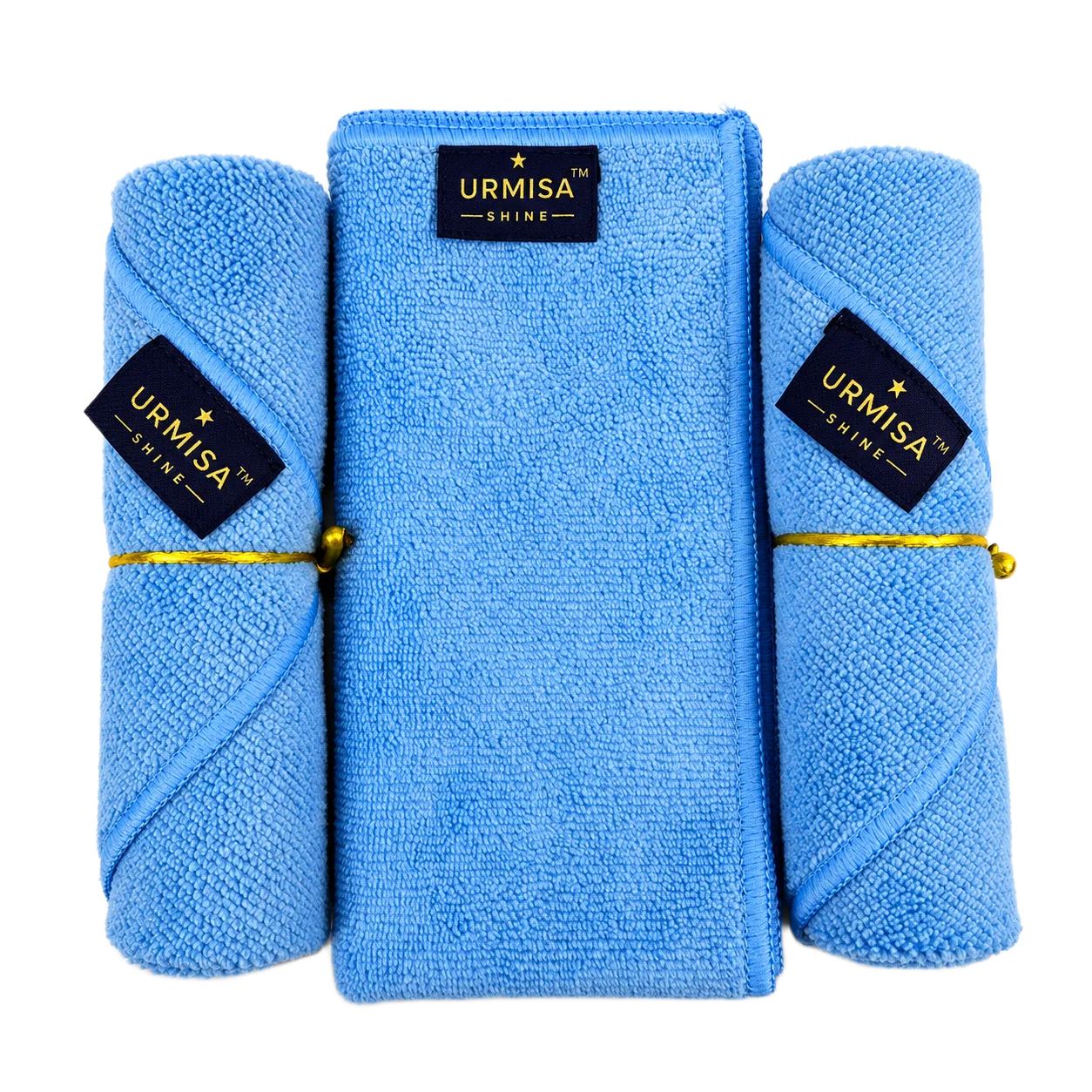
You've cleaned the same windshield three times and it still hazes over in direct sunlight. The glass cleaner isn't the problem — using a single towel for both spraying and buffing usually is.
Why one towel leaves streaks
A towel that's wet with cleaner will always leave some moisture and residue behind as it wipes, no matter how well it seems to dry. If you then use that same slightly-damp towel to buff, you're redistributing that residue rather than removing it — which is exactly what shows up as streaks under direct light.
The 2-towel technique
- Towel one (application): Spray the glass cleaner directly onto this towel — not the glass — and wipe the surface to lift dust and grime.
- Towel two (buff): A completely dry, clean, low-lint cloth. Buff immediately after, using light pressure in straight overlapping lines rather than circles.
Circular motions tend to redeposit residue in the direction of the swirl; straight lines push it clear off the edge of the glass.
Why the towel's weave matters more than the spray
Glass is unforgiving — any lint or loose fibre shows up instantly against light. This is a job for a lower-GSM, tight-weave cloth rather than a thick plush one; density here is about tightness of weave, not thickness of pile. URMISA's 340 GSM cloths are woven tight enough to stay genuinely lint-free on glass while still being soft enough not to mark trim or tinted windows.
Beyond the windshield
The same two-towel logic works for bathroom mirrors, glass tabletops, and eyeglasses — anywhere haze under direct light is the enemy. Keep a dedicated glass towel that never touches anything oily, and it'll stay effective for hundreds of uses.