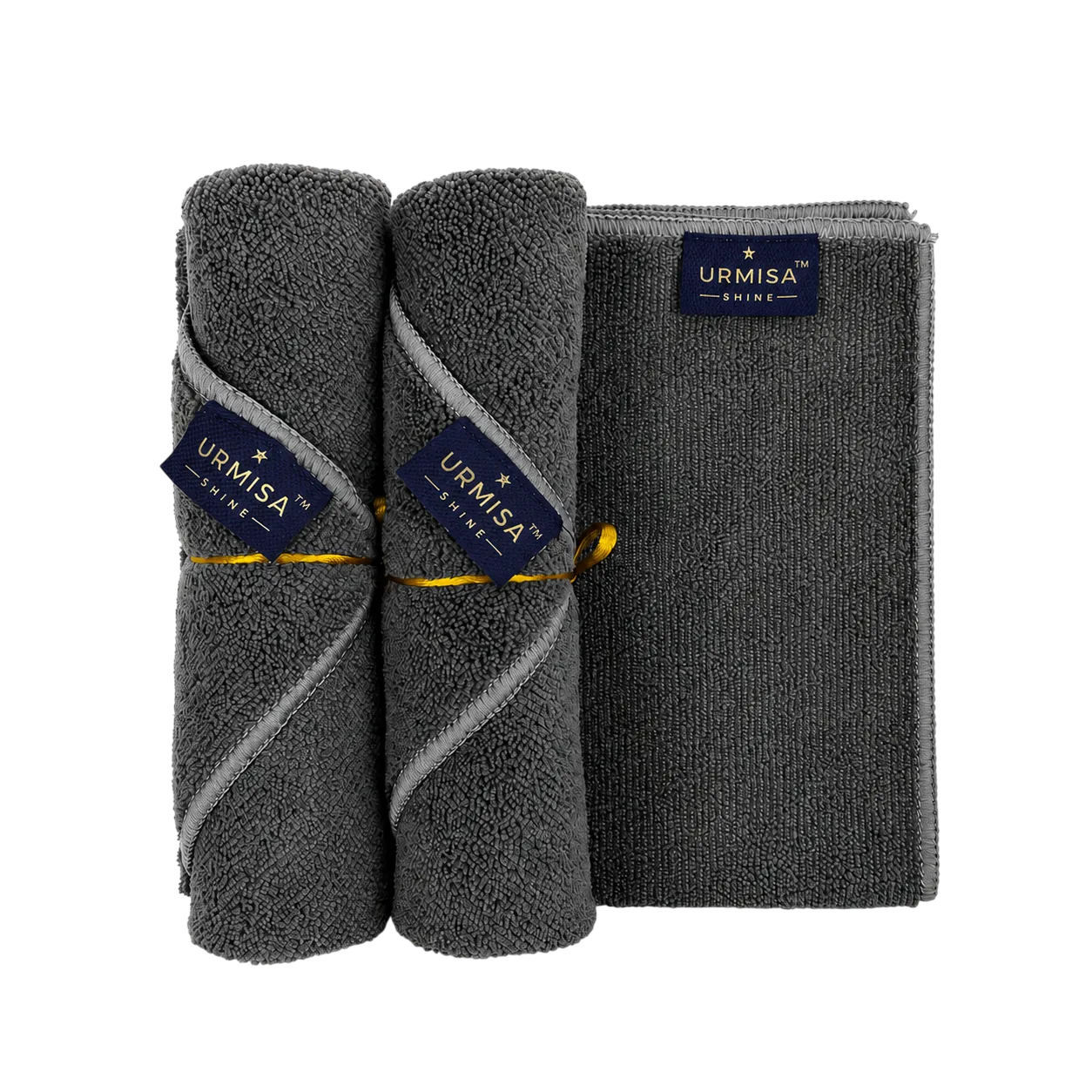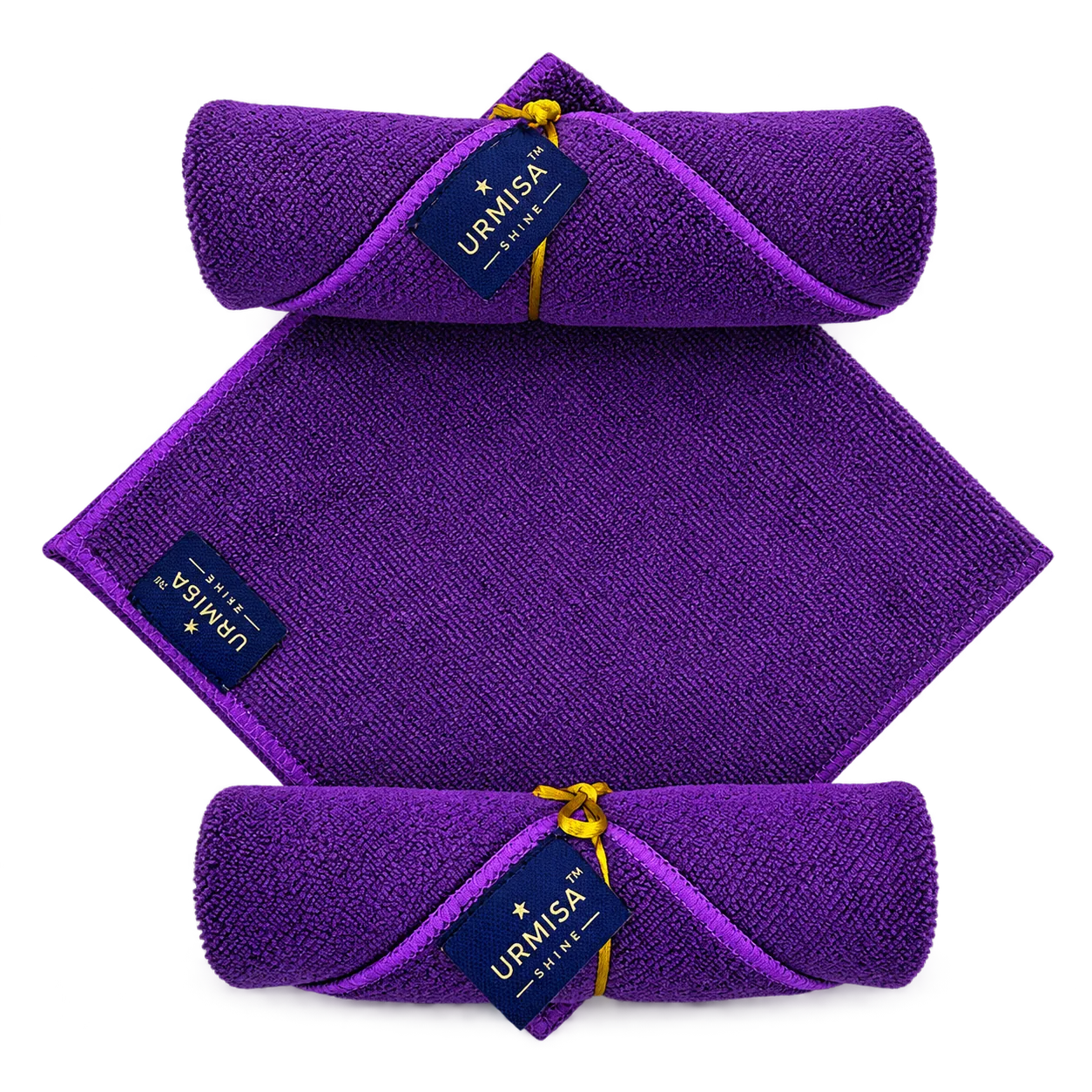

A cotton dishcloth, a paper towel, and a microfiber cloth look like they do the same job. Put them under a microscope and it's obvious they don't — one of them is doing something fundamentally different to dirt.
A fibre 100x finer than a human hair
A human hair is roughly 70 microns across. Cotton fibre runs about 15–20 microns. A single split microfiber strand measures roughly 3–5 microns — thinner than a red blood cell. During manufacturing, each filament is split into a star-shaped cross-section, creating thousands of microscopic channels along its length instead of one smooth surface.
Those channels are the entire trick. A flat cotton fibre pushes dirt around, like a tiny snowplough. A split microfiber fibre scoops dirt into itself and holds it there.
The "static trap" effect
Gliding a dry microfiber cloth across a surface generates a mild static charge. Because the fibres carry a slight positive charge, they actively attract dust, pollen, and fine particulate — the negatively charged stuff cotton and paper simply nudge along the counter. That's why a microfiber cloth used dry on a dusty shelf picks up far more than a damp cotton rag does.
Why this matters for a household, not just a lab
This isn't just a lab curiosity. It's the difference between wiping a counter and actually cleaning it. A cloth that traps rather than smears means fewer passes, less residue left behind, and — because it isn't shredding fibres into the air the way paper does — genuinely less waste per clean.
Not all microfiber is equal
Split-fibre quality varies enormously between brands — cheaper cloths often use unsplit or partially-split filaments that behave much closer to ordinary cotton. URMISA's NanoGrip fibre architecture is built specifically to maximise this splitting, which is why the same wipe lifts more with noticeably less effort.