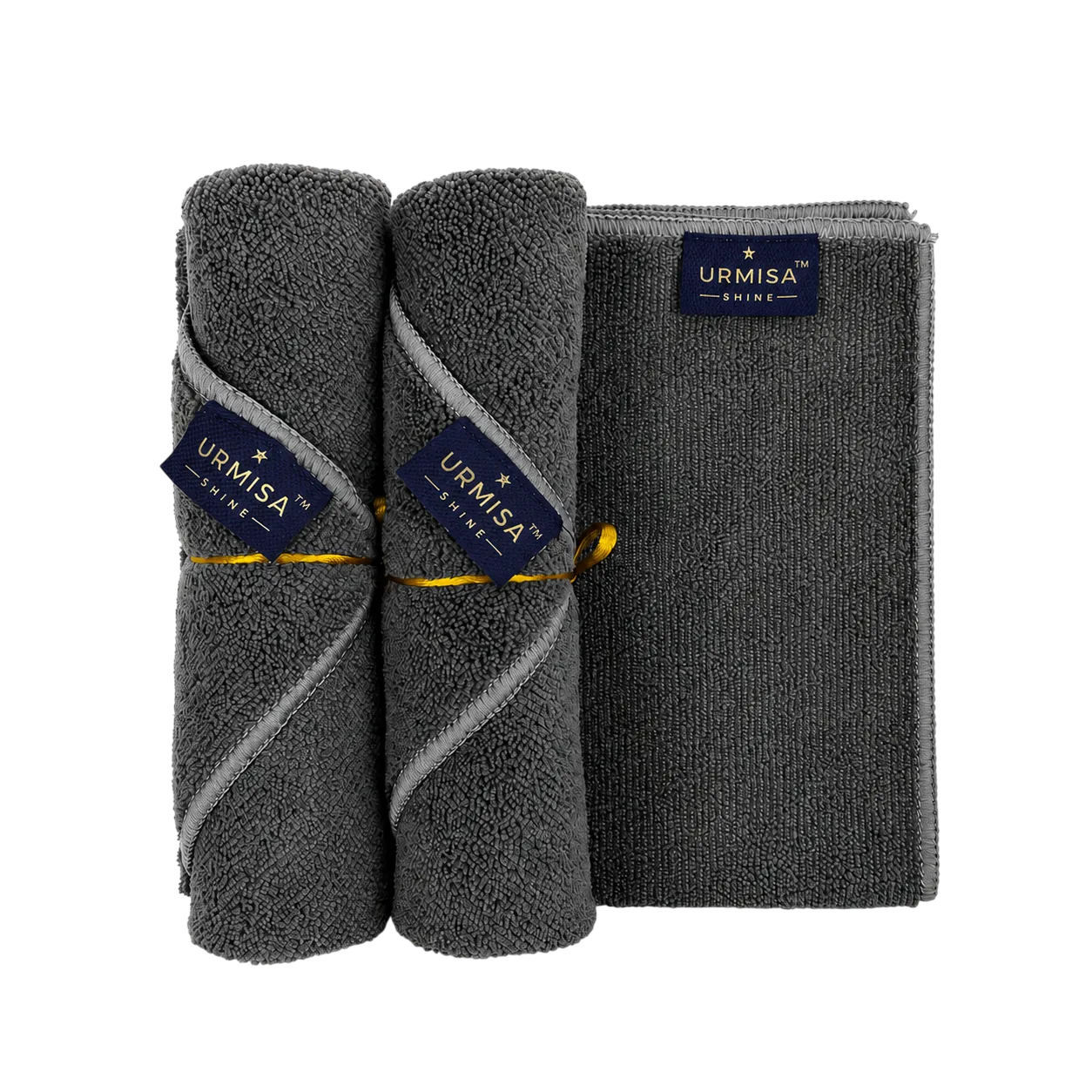

Every microfiber cloth claims to be "premium." Very few brands explain what that actually means at the fibre level — which makes it hard to tell a genuine difference from a marketing word. Here's what NanoGrip actually is.
The problem with standard microfiber
Not all split fibre is split equally. Manufacturing quality determines how completely each filament separates into its star-shaped cross-section — the geometry that creates surface area for trapping dirt. Inconsistent or incomplete splitting means a cloth that looks like microfiber but performs much closer to ordinary polyester.
What NanoGrip does differently
NanoGrip is URMISA's fibre architecture, engineered for maximum surface contact — a tighter, more consistent split across every filament, so more of the fibre's surface area is actually doing work against a surface rather than sitting idle. In practical terms: more dirt lifted per wipe, with less pressure and fewer passes needed.
Why it also affects durability
Fibre architecture isn't just about day-one performance. A tighter, more consistent split structure holds up better across repeated wash cycles, which is part of why URMISA cloths are built to a 500-wash standard rather than degrading noticeably within the first few dozen.
The honest caveat
No fibre architecture replaces correct washing — fabric softener and high heat will degrade even the best-engineered microfiber over time. NanoGrip gives the cloth the best possible starting point; how you wash it decides how long that advantage lasts. See our care instructions for the specifics.