
Most Indian households keep three or four different sprays under the sink — glass cleaner, surface disinfectant, dusting spray, kitchen degreaser. For a large share of everyday cleaning, none of them are actually necessary.
Water is doing more work than you think
Because split microfiber physically traps particles rather than just pushing them around, a cloth that's lightly dampened with plain water lifts dust, fingerprints, and light grime from most hard surfaces just as effectively as a chemical spray — without leaving a chemical residue that then needs its own wipe-down.
Where a dry or damp cloth genuinely replaces a spray
- Dusting furniture, shelves, and electronics — dry cloth
- Wiping down countertops after cooking — damp cloth
- Glass, mirrors, and screens — damp cloth, buffed dry
- Light bathroom fixtures and tiles — damp cloth
Where you still need a proper cleaning agent
Be realistic: baked-on grease, mould, and genuine disinfection (post-illness, cutting boards, raw meat surfaces) still call for an actual cleaning agent or disinfectant. Microfiber-and-water is a daily-maintenance habit, not a replacement for deep cleaning or hygiene protocols where they matter.
Why this adds up over a year
Fewer spray bottles bought, less plastic packaging, and less chemical residue on surfaces your family actually touches — all from one habit change. It's also simply less to keep stocked in the house.
The cloth has to earn this job
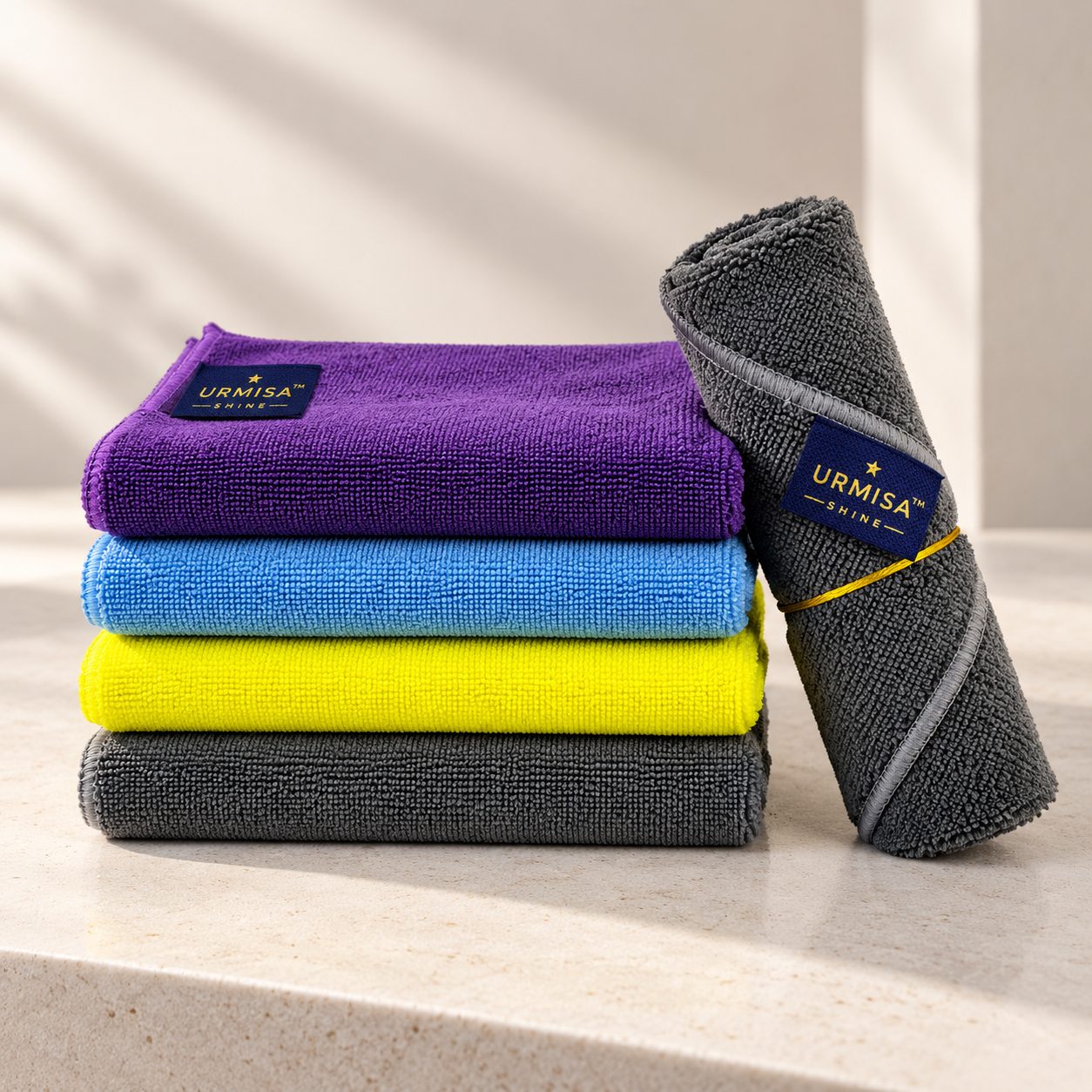
This only works if the cloth is genuinely good at trapping dirt without chemical help — a thin or low-quality cloth will just smear grime around with water instead of lifting it. This is precisely the everyday, do-everything role URMISA's 340 GSM cloths are built for.