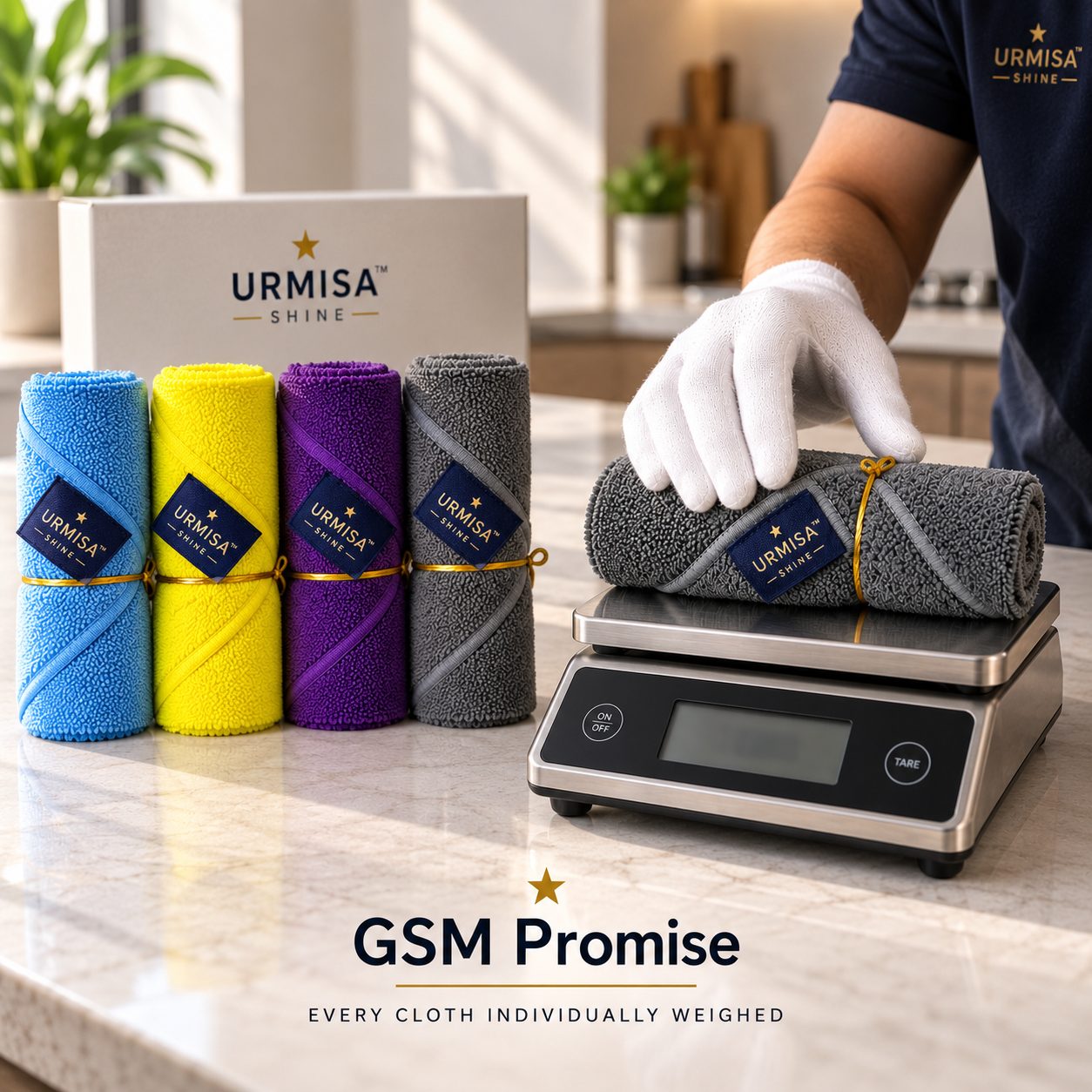

Walk into any general store and you'll find microfiber-labelled cloths for a fraction of what a branded pack costs. On paper, they look identical. In use, the difference shows up within weeks — and the "saving" quietly disappears.
What "cheap" usually means in practice
- Unsplit or poorly split fibre — behaves much closer to ordinary polyester cloth than true microfiber, with far less dirt-trapping ability.
- GSM inflation — a listing claiming 300 GSM that's actually significantly lighter once you weigh it, because there's no verification behind the number.
- Loose weave — sheds lint from day one, which defeats the entire point of using microfiber on glass or screens.
- Short lifespan — often thinning, fraying, or losing absorbency within 15–20 washes.
Doing the actual maths
A cheap 5-pack that needs replacing every two months works out more expensive over a year than a genuine microfiber pack that's still performing at wash 200. It also means more frequent purchases, more packaging, and more frustration in between — streaky glass, lint on a freshly wiped screen, a towel that's stopped absorbing.
What you're actually paying for with a genuine cloth
Properly split fibre that keeps trapping dirt wash after wash. A GSM figure that's actually true to the label. A weave tight enough to stay lint-free on glass and screens. And — in URMISA's case — a published GSM Promise and a Warranty Program that gives you real recourse if what arrives doesn't match what's promised, rather than a number nobody stands behind.